


Who Invented Padel? The Origins, History, and Fun Facts About This Sport

The Origins of Padel and Everything You Need to Know About Its Invention
Padel is undoubtedly one of the hottest sports right now, and it has experienced rapid growth in Italy, especially in recent years. Both indoor and outdoor courts are becoming increasingly common in Italian cities, as are the players—both professional and recreational—who love to take on this sport. This is because padel is a simple sport accessible to everyone, requiring only basic and fairly lightweight gear: all you need is a racket, a technical-fabric shirt and shorts, and a pair of shoes that provide good traction—and you’re ready to play!
Until a few years ago, few people knew about this sport, but padel actually has an interesting history. So let’s find out together who invented padel, how it originated, and how it spread throughout Italy.
Who invented padel?
 Padel is a game very similar to tennis, but unlike tennis, it emerged later and almost entirely by chance. Padel was in fact invented in the late 1960s in Mexico by Enrique Corcuera, a wealthy businessman who wanted to create space in his backyard to build a tennis court. However, since the available area was too small to build a traditional tennis court (which, according to the rules, should measure 23.77 m long by 10.97 m wide), he decided to build a smaller court, enclosed by brick walls and equipped with metal nets to prevent the ball from going out of bounds.
In a very short time, the game spread beyond Mexico’s borders and became popular in Spain. This was thanks to a family friend from Corcuera, Alfonso de Hohenlohe, who, after visiting him in Mexico, was fascinated by the new way of playing and decided to introduce it to his home country as well. Alfonso de Hohenlohe made several changes and improvements to the rules, as well as to the characteristics of the playing field, eventually establishing the rules we know today.
The Origins of Padel: From Spain to the Boom in Argentina
In Spain, Alfonso de Hohenlohe had several padel courts built within a hotel complex he owned, the Marbella Club. That is how the sport began to spread and grow increasingly popular among high society circles. New padel courts were then built in other areas, and padel began to be played throughout the country and by people from all social classes. In Spain, padel won over not only the Spanish public but also several Argentines who were vacationing there in the early 1980s and who, upon returning to Argentina, decided to build padel courts throughout the country, achieving immediate success.
After Argentina, padel quickly spread throughout the Americas, to Brazil, and in more recent years to Europe as well, including Italy. In Italy, the Italian Padel Federation ( F.I.G.P.) was founded in 1991 by a group of enthusiasts who wanted to raise awareness of and promote the sport. The initiative immediately gained the support of various sports associations, and padel began to be played in accordance with C.O.N.I. regulations.
The official presentation of the new sport took place in 1991 during the Sport Show at the Bologna Fair, where a padel court was set up and several matches were played between teams representing Spain, Argentina, and Italy. The new sport immediately captured the public’s interest and began to grow rapidly: in the summer of 1991, the first two official tournaments of the national championship were held.
Paddle or padel? The origin of the name
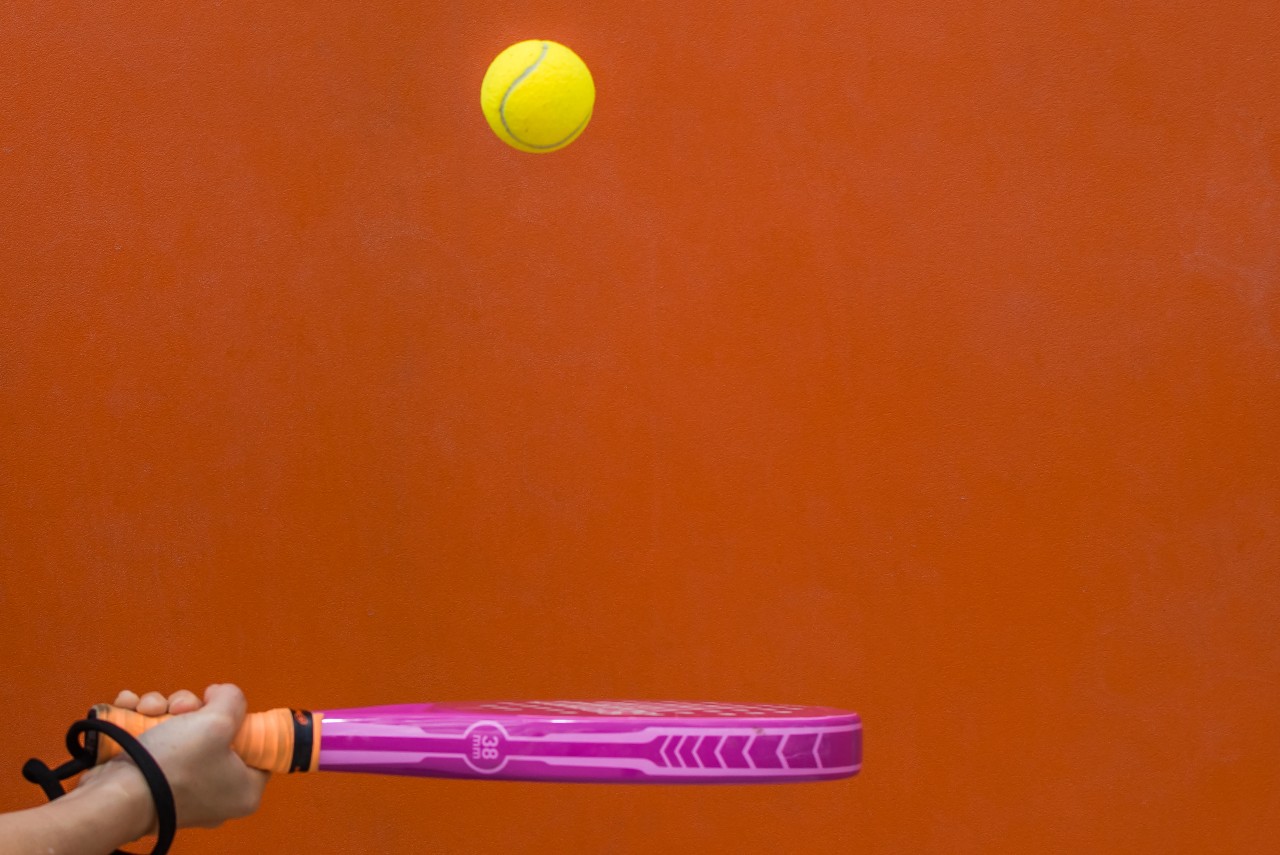 Paddle or padel? There’s often some confusion about the correct term for this sport, so it’s important to clarify things a bit. Let’s take a few steps back and retrace the milestones that led to the sport’s origins and spread. As we’ve seen, padel originated in Mexico , then made its way to Spain, and subsequently expanded to Argentina, the Americas, Brazil, and Europe.
It was the sport’s inventor himself, Enrique Corcuera, who called it Paddle Corcuera (paddle refers to the wooden rackets used to play the game), but shortly thereafter, given its strong resemblance to tennis, it was renamed Paddle Tennis. Once it arrived in Spain, the name changed again: the English word was translated and adapted to Spanish, becoming “padel” (which is simply the Spanish pronunciation of the English word “paddle”). From there, the term spread throughout the world, and even today in Spain, “padel” is the preferred and most commonly used term to refer to this sport.
It should also be noted that padel should not be confused with paddle tennis, which is very popular in the United States; although the two sports have similar rules and characteristics, they are completely different.
Padel Today: How Many Players Are There?
From its very beginnings, padel was conceived as a doubles sport, with two players per team, and even today it is played two-on-two—at least according to the Federation’s guidelines. This is currently the only recognized format for official tournaments, and it is also the most fun, dynamic, and spectacular. Generally, padel courts are designed for four-player matches, which makes singles play more complicated.
Given the growing demand, courts designed for one-on-one play have also become increasingly common in recent years, so players can try out a different style of play. These courts are smaller in size to allow players to make the most of the ball’s bounce and hit it without exerting excessive effort.
A further sign of recognition of the strong growth of this sport and the ever-increasing presence of players, fans, and sports clubs throughout the country is the recent decision by the National Assembly of the Italian Tennis Federation to change the Federation’s name from FIT ( Italian Tennis Federation) to FITP (Italian Tennis and Padel Federation). If approved by CONI, the new name will take effect on January 1, 2023. In Italy, padel currently has over 800,000 players and more than 70,000 registered members, but it still has enormous growth potential, especially among young people and children.
 Now that you know everything there is to know about the origins and history of padel, all you have to do is give the sport a try! To play your best and try to beat your opponents, you’ll need the right gear: a good racket, of course, but also comfortable clothing that ensures maximum freedom of movement.
At the Padel Mi Amor online store, you can find everything you need for your matches:men’s and women’spadel apparel made from technical, breathable fabrics, including shirts, polo shirts, sweatshirts, men’s padel shorts, and women’s padel skirts —perfect for players of all skill levels!
For more information on available products, don’t hesitate to contact us!
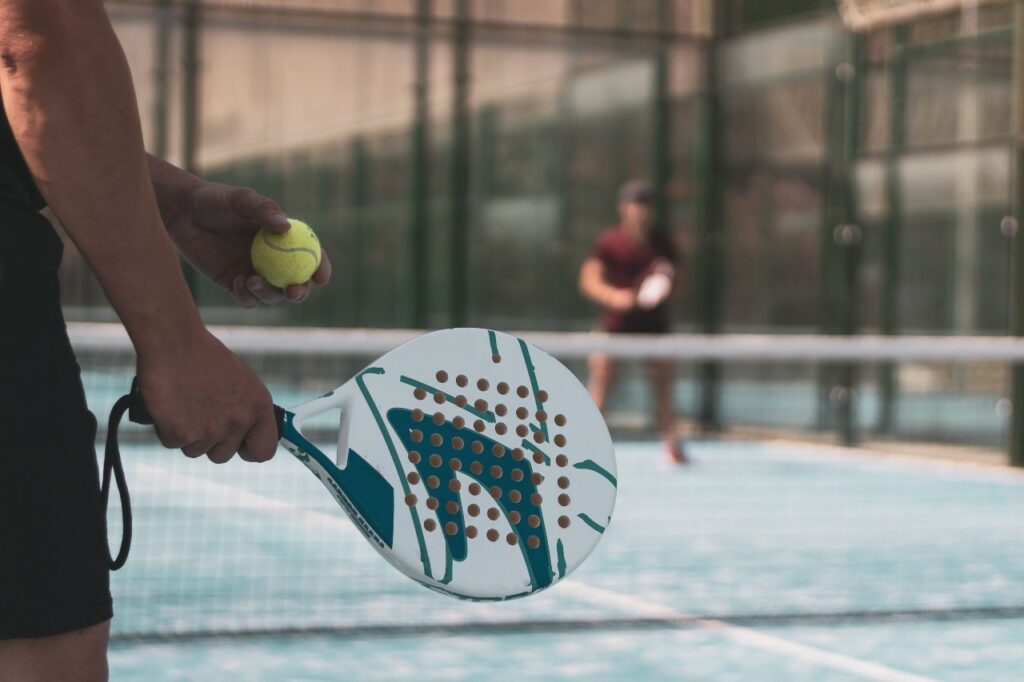
 Before we dive into explaining the rules of the game, let’s first take a closer look at the difference between padel and tennis. It’s important to note that padel was developed later than tennis. In fact, it was invented in Mexico in 1969, purely by chance, when Enrique Corcuera, a wealthy Mexican businessman, decided to build a tennis court in his backyard. Since he had a small space available that was enclosed by walls, he decided to use a smaller, regulation-sized court: and so the first padel court was born. Tennis, on the other hand, originated much earlier, in 1873, thanks to Walter Clopton Wingfield, and the rules were officially established in 1877, when the first Wimbledon tournament was held in Great Britain.
 The first rule to remember when learning to play padel is that, unlike in tennis, the ball can bounce both on the ground and off the perimeter walls of the court. If the ball, after touching the ground, bounces off a wall or glass panel, it remains in play and can be hit on the fly until it hits the ground again.
 Padel rules call for three sets: the duration of each set can depend on various factors, such as the players’ experience and skill level. Generally, for beginners, a set tends to be fairly short, while for more experienced players, match duration can be significantly longer.